

Daily, over a million hazardous material shipments traverse U.S. commerce, demanding skilled operations; understanding these materials is crucial for safety and regulatory adherence.
Effective hazmat training, bolstered by tools like DGIS software, streamlines processes, minimizes risks, and ensures compliant dangerous goods shipping across numerous locations.
Regional firefighters are enhancing their response capabilities through OSU Fire Service Training courses, preparing for effective handling of hazardous material incidents.
What are Hazardous Materials?
Hazardous materials, often shortened to hazmat, encompass substances posing unreasonable risks to health, safety, or property during transportation. These aren’t limited to overtly dangerous chemicals; everyday items can qualify. The sheer volume – over a million shipments daily in the U.S. – highlights their pervasive presence in commerce;
Misconceptions abound regarding hazmat; they are far more common than many realize. This broad category includes explosives, gases, flammable liquids and solids, toxic substances, radioactive materials, and corrosives. Proper identification, utilizing placards, labels, and shipping papers, is paramount.
Effective hazmat operations require understanding that these materials demand specialized handling due to their potential for harm. Training, like that offered by OSU Fire Service Training, is vital for emergency responders. Compliance, aided by software like DGIS, is essential for safe and legal transport, mitigating risks associated with these widespread substances.
The Importance of HazMat Training
Given the daily movement of over a million hazardous material shipments, comprehensive hazmat training is not merely recommended – it’s essential. The potential for incidents involving these substances necessitates a highly skilled and prepared workforce, from shippers to emergency responders.
Training, such as the courses provided by OSU Fire Service Training, equips personnel to recognize, assess, and mitigate risks associated with hazardous materials. This includes understanding proper handling procedures, utilizing personal protective equipment (PPE), and implementing effective containment strategies.
Furthermore, regulatory compliance, supported by tools like DGIS software, is a critical component of hazmat training. Proper training minimizes risk, ensures adherence to PHMSA and OSHA guidelines, and safeguards both personnel and the environment. Investing in robust hazmat training is an investment in safety and responsible operations.

Understanding Regulations & Agencies
PHMSA addresses hazmat transport regulations, while OSHA focuses on workplace safety; the EPA protects the environment, all crucial for compliant operations and incident response.
PHMSA (Pipeline and Hazardous Materials Safety Administration)
The Pipeline and Hazardous Materials Safety Administration (PHMSA) is a key federal agency responsible for ensuring the safe, reliable, and secure transportation of hazardous materials across all modes – pipeline, rail, highway, and water.
PHMSA develops and enforces regulations governing the packaging, marking, labeling, and placarding of hazardous materials shipments. They also oversee the training requirements for individuals involved in these operations, ensuring competency and adherence to safety protocols.
Recent PHMSA activity, as evidenced by their September 24th Interpretive Response Letter (IRL), demonstrates their commitment to clarifying regulations and addressing specific industry questions regarding hazardous materials transportation. This proactive approach highlights their dedication to continuous improvement and safety.
Understanding PHMSA’s regulations is paramount for anyone involved in hazardous materials operations, as compliance is not only legally mandated but also essential for protecting public safety and the environment.

OSHA (Occupational Safety and Health Administration)
The Occupational Safety and Health Administration (OSHA) plays a vital role in protecting workers from hazards associated with hazardous materials. While PHMSA focuses on transportation, OSHA concentrates on workplace safety concerning these substances.
OSHA’s Hazardous Waste Operations and Emergency Response (HAZWOPER) standard (29 CFR 1910.120) is particularly crucial. It outlines requirements for employees involved in cleanup operations, emergency response, and handling hazardous waste at uncontrolled hazardous waste sites.
Effective training, as highlighted by firefighter training at Kiamichi Tech, is a cornerstone of OSHA compliance. This training equips personnel to safely respond to incidents involving hazardous materials, minimizing risks to themselves and the surrounding community.
OSHA inspections ensure employers provide appropriate personal protective equipment (PPE), implement safe work practices, and maintain a safe working environment when dealing with hazardous materials.
EPA (Environmental Protection Agency)
The Environmental Protection Agency (EPA) is central to protecting human health and the environment from the risks posed by hazardous materials. Its authority stems from legislation like the Resource Conservation and Recovery Act (RCRA) and the Comprehensive Environmental Response, Compensation, and Liability Act (CERCLA), often called Superfund.
EPA regulates the generation, transportation, treatment, storage, and disposal of hazardous waste. This includes establishing standards for facilities handling these materials and responding to releases that threaten the environment.
The agency’s involvement extends to incident response, working alongside entities like fire departments – those undergoing training at Kiamichi Tech – to mitigate environmental damage from spills and releases.
EPA also plays a role in community right-to-know programs, ensuring the public has access to information about hazardous chemicals present in their area, fostering transparency and preparedness.

Hazard Identification
Accurate identification is paramount; recognizing placards, labels, and shipping papers is vital for safe hazmat operations, ensuring proper handling and response protocols.
Recognizing Placards and Labels
Placards and labels are critical visual communication tools in hazardous materials transportation, providing immediate warnings about the dangers present. These markings are standardized by regulations, offering a quick identification system for emergency responders and transportation personnel.
Placards, larger and displayed on transport vehicles, indicate the primary hazard class of the materials being carried. Labels, smaller and affixed directly to packages, offer specific hazard details. Correctly interpreting these symbols – from explosive to radioactive – is fundamental to safe handling.
Understanding the color-coding and symbols is essential; for example, a red placard often signifies flammable materials, while a yellow placard may indicate poisonous substances. Misinterpreting these cues can lead to severe consequences, highlighting the importance of thorough training and consistent review of hazard communication systems.
Effective hazard identification through placards and labels is the first line of defense in preventing incidents and ensuring appropriate response measures are taken when dealing with hazardous materials.
Shipping Papers and Documentation
Shipping papers are the detailed written instructions accompanying hazardous materials during transport, serving as a vital communication link between shippers, carriers, and emergency responders. These documents contain crucial information beyond what placards and labels convey, offering a comprehensive hazard profile.
Essential details include the proper shipping name, hazard class, UN identification number, packing group, and quantity of the material. Accurate and complete shipping papers are legally required and are paramount for safe transportation and incident management.
Understanding the specific format and required information on these documents is a key component of hazmat training. They provide critical guidance for handling spills, leaks, or other emergencies, enabling responders to select appropriate protective measures and containment strategies.
Proper documentation ensures regulatory compliance and facilitates a coordinated response, minimizing risks associated with hazardous materials transport.
Hazard Classes: An Overview
Hazardous materials are categorized into nine distinct classes based on their primary hazard. These classes provide a standardized system for identifying and communicating the risks associated with different substances during transportation and handling. Understanding these classifications is fundamental to hazmat operations.
Class 1 encompasses explosives, while Class 2 covers various gases, including flammable, non-flammable, and poisonous varieties. Class 3 designates flammable liquids, and Class 4 includes flammable solids, substances that are readily combustible;
Classes 5 and 6 address oxidizers and organic peroxides, and toxic or infectious substances, respectively. Class 7 is reserved for radioactive materials, demanding specialized handling protocols. Classes 8 and 9 cover corrosives and miscellaneous hazardous materials, completing the spectrum of categorized risks.
Each class dictates specific packaging, labeling, and placarding requirements, ensuring consistent hazard communication throughout the supply chain.
Class 1: Explosives

Class 1 materials represent a significant hazard due to their inherent instability and potential for rapid detonation or deflagration. This class is subdivided into six divisions, ranging from mass explosion hazards like dynamite to relatively insensitive explosives.
Division 1.1 includes explosives that have a mass explosion hazard, meaning they can detonate nearly instantaneously. Division 1.2 covers explosives with a projection hazard, while 1.3 encompasses explosives with a fire hazard, often used in fireworks.
Divisions 1.4, 1.5, and 1.6 contain explosives with decreasing sensitivity and hazard levels. Proper handling requires strict adherence to regulations regarding packaging, storage, and transportation, minimizing the risk of accidental initiation.
Understanding the specific division within Class 1 is crucial for implementing appropriate safety measures and emergency response protocols.
Class 2: Gases
Class 2 encompasses compressed, liquefied, and dissolved gases, presenting unique hazards due to their potential for expansion, flammability, toxicity, or corrosivity. These gases are categorized into three divisions based on their properties and associated risks.
Division 2.1 contains flammable gases like methane and propane, posing a significant fire hazard. Division 2.2 includes non-flammable, non-toxic gases such as helium and nitrogen, primarily presenting asphyxiation risks by displacing oxygen.
Division 2.3 comprises toxic gases like chlorine and ammonia, which can cause severe health effects even at low concentrations. Proper ventilation and respiratory protection are vital when handling these substances.
Safe handling of Class 2 materials necessitates understanding their specific properties, utilizing appropriate containers, and implementing robust leak detection and emergency response procedures.
Class 3: Flammable Liquids
Class 3 materials are flammable liquids with flash points below 60°C (140°F), posing substantial fire risks. These liquids readily vaporize at normal temperatures, forming ignitable mixtures with air. Common examples include gasoline, acetone, and ethanol.
The hazard level depends on the liquid’s flash point – the lowest temperature at which it can form an ignitable mixture. Liquids with lower flash points are considered more dangerous. Proper storage in approved containers, away from ignition sources, is crucial.
Static electricity buildup during transfer operations is a significant concern. Grounding and bonding procedures are essential to prevent sparks. Spill control measures, including absorbent materials, must be readily available.
Effective response to Class 3 incidents requires understanding the liquid’s properties, utilizing appropriate extinguishing agents (foam, dry chemical), and implementing robust ventilation strategies.
Class 4: Flammable Solids
Class 4 encompasses flammable solids, materials that are readily combustible or may cause fire through friction. This category is divided into three subgroups: flammable solids, spontaneously combustible materials, and dangerous when wet materials.
Examples include sulfur, matches, and certain types of plastics. Spontaneously combustible materials, like charcoal, can ignite upon exposure to air. “Dangerous when wet” substances, such as sodium metal, react violently with water, releasing flammable gases.
Handling requires preventing contact with ignition sources and ensuring adequate ventilation. Storage must be in dry, well-ventilated areas, away from oxidizing agents. Proper packaging is vital to prevent friction or impact.
Emergency response involves isolating the area, using appropriate extinguishing agents (dry chemical, CO2), and avoiding water contact with “dangerous when wet” materials. Understanding the specific hazards of each subgroup is critical.
Class 5: Oxidizers and Organic Peroxides

Class 5 materials present significant fire and explosion hazards. Oxidizers enhance combustion, while organic peroxides are inherently unstable and prone to decomposition, potentially leading to detonation. This class is further divided into two subgroups: Oxidizers and Organic Peroxides.
Common oxidizers include ammonium nitrate and hydrogen peroxide. Organic peroxides are often found in resins and certain explosives. These substances don’t necessarily burn themselves, but accelerate the burning of other materials.
Handling requires preventing contact with combustible materials, heat, and contamination. Storage must be in a cool, dry, and well-ventilated area, separated from flammable substances. Proper labeling and segregation are crucial.
Emergency response involves isolating the area, using copious amounts of water to cool containers, and avoiding friction or impact. Understanding the specific decomposition characteristics of organic peroxides is vital for safe handling.
Class 6: Toxic and Infectious Substances
Class 6 encompasses materials posing health hazards, categorized into Toxic substances and Infectious substances. Toxic materials can cause harm through inhalation, skin contact, or ingestion, exhibiting varying degrees of toxicity. Infectious substances contain pathogens that can cause disease in humans or animals.
Examples include pesticides, cyanides, and medical waste. Proper packaging and labeling are paramount to prevent exposure and contamination. Handling requires strict adherence to safety protocols, including the use of appropriate personal protective equipment (PPE).
Response to a release involves isolating the area, preventing further exposure, and decontaminating affected personnel and equipment. Specific antidotes or treatments may be necessary depending on the substance involved.
Infectious substances demand stringent containment procedures to prevent the spread of disease. Proper disposal methods are critical to minimize environmental and public health risks. Detailed knowledge of specific pathogens is essential.
Class 7: Radioactive Materials
Class 7 materials emit ionizing radiation, posing a significant health hazard. These substances are categorized based on their activity level and the type of radiation emitted – alpha, beta, or gamma. Exposure can cause immediate or long-term health effects, including radiation sickness and cancer.
Common examples include medical isotopes, nuclear fuel, and industrial radiography sources. Packaging must meet stringent requirements to shield radiation and prevent leakage. Specialized training is essential for handling and transporting these materials safely.
Responding to a release involves establishing a contamination control zone, monitoring radiation levels, and minimizing exposure time. Remote handling techniques are often necessary. Decontamination procedures are complex and require specialized equipment.
Accurate identification and proper shielding are crucial. Emergency responders must understand the principles of radiation protection – time, distance, and shielding – to mitigate risks effectively.
Class 8: Corrosives
Class 8 materials cause visible destruction or irreversible alterations upon contact with living tissue, or damage to materials. This category includes strong acids and bases, posing significant risks to skin, eyes, and respiratory systems. Exposure can result in severe burns, permanent scarring, and blindness.
Common examples include sulfuric acid, hydrochloric acid, and sodium hydroxide, frequently used in industrial processes. Packaging must be resistant to corrosion and prevent leakage. Proper ventilation is crucial when handling these substances.

Responding to a spill requires neutralizing the corrosive agent, if possible, and containing the release to prevent environmental contamination. Appropriate personal protective equipment (PPE) is essential, including acid-resistant suits and respirators.
Dilution can sometimes lessen the hazard, but must be done cautiously. Emergency responders must understand the specific properties of the corrosive material to select the appropriate response measures.
Class 9: Miscellaneous Hazardous Materials
Class 9 encompasses hazardous materials that don’t fit neatly into the other eight hazard classes, presenting a diverse range of risks. These materials are considered hazardous to the environment, posing threats to ecosystems and wildlife. Examples include lithium batteries, air bag inflators, and genetically modified organisms.
While not immediately corrosive, flammable, or toxic in the same way as other classes, they still require careful handling and transportation. Improper disposal can lead to long-term environmental damage.
Packaging for Class 9 materials is designed to prevent release and minimize environmental impact. Responders must be aware of the specific hazards associated with each substance within this class.
Regulatory compliance is vital for shipping these materials, ensuring proper labeling, documentation, and emergency response procedures are in place to mitigate potential risks.
Operational Considerations
Effective site assessment and control are paramount, alongside utilizing appropriate personal protective equipment (PPE) for responder safety during hazmat incidents.
Decontamination procedures must be meticulously followed to prevent further exposure and environmental contamination, ensuring a safe operational environment.
Site Assessment and Control
Initial site assessment is critical, involving a systematic evaluation of the hazard zone to determine the nature and extent of the release. This includes identifying the hazardous material involved, assessing weather conditions – wind speed and direction are vital – and evaluating potential impacts to people, property, and the environment.
Establishing control zones – the hot, warm, and cold zones – is fundamental for protecting responders and the public. The hot zone represents the immediate area of contamination, requiring the highest level of PPE; The warm zone serves as a decontamination corridor, and the cold zone is the support area.
Perimeter control, including access restrictions and security measures, prevents unauthorized entry and ensures a safe operating environment. Continuous monitoring of the hazard zone for changes in conditions is essential, utilizing appropriate detection equipment. Effective communication and coordination among responders are paramount throughout the entire process, ensuring a unified and safe response.
Personal Protective Equipment (PPE)
Selecting the appropriate Personal Protective Equipment (PPE) is paramount when operating in potentially hazardous environments. This selection must be based on the identified hazards, considering the material’s properties, concentration, and potential routes of exposure – inhalation, skin absorption, ingestion, and injection.
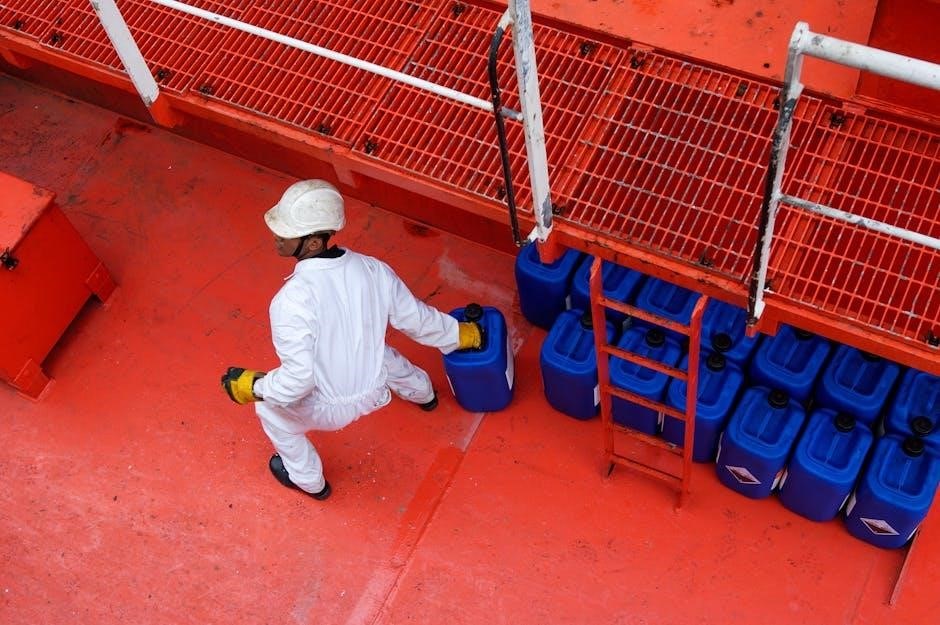
Essential PPE includes respiratory protection, such as respirators (SCBA or air-purifying), protective clothing (suits, gloves, boots) resistant to the specific chemical, eye and face protection (goggles, face shields), and potentially, specialized equipment like chemical splash suits.
Proper donning and doffing procedures are crucial to prevent contamination. Regular inspection and maintenance of PPE are vital to ensure its effectiveness. Training on the limitations of each piece of equipment is essential, emphasizing that PPE is a barrier, not an absolute shield, and safe work practices remain the primary defense.
Decontamination Procedures
Decontamination is a critical step following a hazardous materials incident, aiming to remove or neutralize contaminants from people, equipment, and the environment. It’s a multi-stage process, beginning with rapid removal of victims from the contaminated area, followed by initial gross decontamination to remove bulk contamination.
Detailed decontamination involves thorough washing with appropriate solutions, selected based on the specific hazard. Dedicated decontamination corridors, utilizing controlled water runoff and collection systems, are essential to prevent secondary contamination.
Personnel involved in decontamination must wear appropriate PPE, and procedures should be documented meticulously. Proper disposal of contaminated materials is vital, adhering to environmental regulations. Remember, decontamination isn’t simply cleaning; it’s a systematic process to minimize further exposure and environmental impact.
Emergency Response Procedures
Initial actions prioritize scene safety and victim rescue; containment prevents spread, while prompt notification to authorities and reporting ensures coordinated response efforts.
Initial Response Actions
Upon discovering a hazardous materials incident, the immediate priority is ensuring personal safety and securing the scene. This involves recognizing the hazard from a safe distance, assessing the situation quickly, and isolating the area to prevent further exposure.
Emergency responders must don appropriate Personal Protective Equipment (PPE) before approaching the affected zone, safeguarding against potential contaminants. Establishing clear communication channels is vital for coordinating efforts and relaying critical information.
Initial actions also encompass identifying the substance involved, if possible, utilizing resources like placards, labels, and shipping papers. Evacuation procedures should be initiated promptly, moving individuals upwind and away from the release. Remember, effective initial response minimizes the impact and sets the stage for a successful resolution.
Containment and Confinement
Following initial response, containment and confinement become paramount to prevent the spread of hazardous materials. This often involves creating a perimeter to isolate the affected area, utilizing absorbent materials to soak up liquids, and diking to contain spills.
For gaseous releases, vapor suppression techniques may be employed, while solid materials require careful covering to minimize dust dispersion. Proper ventilation is crucial to reduce vapor concentrations and improve air quality within the hazard zone.

Effective confinement strategies depend on the specific properties of the substance and the nature of the release. Responders must continuously monitor the situation, adjusting containment measures as needed, and prioritizing the protection of both people and the environment. Careful planning and execution are essential for successful containment.
Notification and Reporting
Prompt and accurate notification is critical during a hazardous materials incident. Initial reports should detail the substance involved, quantity released, and potential hazards to emergency responders and the public.
Regulatory agencies like PHMSA require specific reporting procedures for certain incidents, particularly those involving pipelines or transportation. These reports often include detailed information about the cause of the release, response actions taken, and any injuries or environmental damage.
Maintaining clear communication with local emergency planning committees (LEPCs) and state emergency response commissions (SERCs) is also vital. Accurate documentation of all notifications and reports is essential for legal and compliance purposes, ensuring a comprehensive record of the incident and response.